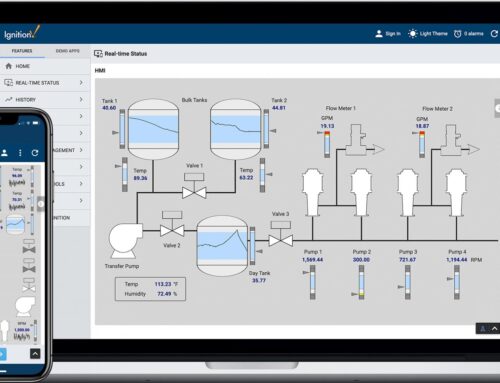
In today’s rapidly evolving food and beverage industry,regulatory compliance is not just a legal obligation but a testament to a company’s commitment to quality,safety,and reliability. Navigating the complex landscape of international standards and guidelines necessitates the use of cutting-edge technology, and at the forefront of this innovation is supervisory Control and Data Acquisition (SCADA) systems. These systems offer unprecedented capabilities for real-time data logging, a critical aspect that ensures adherence to regulatory requirements and bolsters operational efficiency.
Through real-time SCADA data logging, companies can meticulously track, analyze, and report various production parameters, thereby guaranteeing that processes remain within permissible limits. This is crucial for meeting stringent criteria imposed by entities like the FDA, USDA, and various international bodies. As a notable example:
- Traceability: SCADA systems facilitate detailed record-keeping of all production variables, enabling swift traceability from raw material input to final product distribution.
- Quality Control: by providing immediate access to data, operators can promptly identify and rectify potential deviations, minimizing product recalls and enhancing customer satisfaction.
- Documentation and Reporting: Automated logging ensures that all necessary documentation is accurately maintained and easily retrievable, considerably reducing the administrative burden.
In this article, we delve into the transformative role of SCADA data logging in regulatory compliance within the food and beverage sector. We explore how leveraging real-time data not only simplifies adherence to legal frameworks but also enhances overall safety procedures, minimizes human error, and supports robust decision-making across all levels—from production managers ensuring real-time adjustments to executives crafting strategic goals.
Join us as we unpack the importance of this technology, providing insightful examples and practical tips to optimize your compliance strategy through effective data logging practices. Whether you are a compliance officer, plant manager, or automation engineer, developing a comprehensive understanding of SCADA data logging can empower your association to achieve sustained regulatory compliance.
Leveraging SCADA Systems for Comprehensive Regulatory Compliance Monitoring
In the realm of food and beverage production, adhering to stringent regulatory requirements is non-negotiable. SCADA systems stand out as essential tools in maintaining compliance through real-time data logging and detailed monitoring. By leveraging these systems, companies can ensure comprehensive oversight of various production processes and environmental conditions, vital for meeting both local and international regulations.SCADA systems enable continuous monitoring of critical parameters such as temperature, pressure, and humidity, all of which significantly impact product quality and safety. For instance,in dairy processing,SCADA can help track pasteurization temperatures to ensure they meet the standards set by health authorities,thereby safeguarding consumer health and maintaining company reputation.
Real-world applications demonstrate how SCADA systems can effectively track compliance metrics, making audits smoother and reducing the risk of costly non-compliance penalties. Integrated alarm systems can notify operators of any parameter breaches, allowing for immediate corrective action. Moreover, through features like automated reporting and past data analysis, SCADA supports trend identification and long-term planning for compliance strategies. Industries can benefit from these systems by significantly reducing manual data entry errors and enhancing traceability. For example, a beverage company might utilize SCADA to automatically log cleaning cycles, ensuring that CIP processes are completed as scheduled and documented for regulatory reviews. This not just secures compliance,but also optimizes operational efficiency and resource use.
Real-Time Data Logging: Enhancing Traceability and Safety in Industrial Processes
Within the complex landscape of industrial processes, capturing and analyzing data in real-time is crucial for maintaining both traceability and safety. By integrating real-time SCADA data logging, businesses can swiftly adapt to both expected and unexpected scenarios, thereby minimizing risks and ensuring operational stability. For instance, in the food and beverage industry, real-time data logging can track every phase of production, capturing critical parameters like temperature, pressure, and pH levels to ensure compliance with stringent safety standards. With these parameters logged continuously, any deviation from predefined thresholds triggers immediate alerts that facilitate prompt corrective actions.
Moreover, real-time data logging supports a robust traceability framework, which is indispensable for regulatory compliance, especially in industries that mandate rigorous product tracking, such as pharmaceuticals or food processing. For example, when a batch of canned goods is recalled, access to logged data allows for rapid identification of all related production batches, aiding in effective recalls and minimizing consumer risk.Key benefits include:
- Immediate Alerting: Automated alerts for deviations help prevent defective batches from leaving the production line.
- Data Integrity: Secure, unalterable records ensure that data remains reliable for audits and traceability.
- Historical Analysis: Trends and anomalies can be analyzed across production cycles to enhance process efficiency.
By leveraging real-time data logging, companies not only adhere to compliance requirements but also enhance their operational resilience and customer trust.
Implementing Best Practices for Data Integrity and accuracy in SCADA Environments
Maintaining data integrity and accuracy within SCADA environments is fundamental to ensuring compliance with regulatory standards. Achieving this requires a multi-faceted approach that encompasses several best practices. To start, it is essential to implement a comprehensive data validation protocol. This involves cross-referencing real-time data against pre-established parameters and historical benchmarks to flag anomalies instantaneously. Such as, monitoring temperature fluctuations in a beverage fermentation process can be fine-tuned through automated validation checks, preventing spoilage and ensuring regulatory adherence. Automated data redundancy systems should also be incorporated to avert data loss; leveraging cloud-based solutions allows for dual-location data storage, enhancing reliability and access speed.
Along with robust validation techniques, employing secure dialog protocols is critical for safeguarding data accuracy. Encryption methods such as TLS (Transport Layer Security) are paramount when transmitting data across networks to protect against interception and tampering. Plus, instituting role-based access control ensures that only authorized personnel can alter sensitive data, greatly diminishing the possibility of errors. Implementing a real-time notification system can further enhance the integrity of SCADA operations by providing immediate alerts for any unauthorized access attempts or breaches. Each of these strategies, when used in concert, not only supports rigorous compliance with industry regulations but also vastly minimizes the risk of human error, thereby preserving the safety and efficiency of operational processes.
Case Studies: Successful Compliance Outcomes through Advanced SCADA Solutions
In the highly regulated food and beverage industry, maintaining accurate and up-to-date records is critical for compliance with safety standards such as the FDA’s Food Safety Modernization Act (FSMA). Real-time SCADA data logging has become an invaluable tool for companies seeking to ensure compliance while minimizing human error. For instance, a large-scale dairy producer implemented an Ignition-based SCADA system, which enabled them to automatically log temperature and humidity levels during processing. This automation not only ensured that their products consistently met safety standards but also provided a digital audit trail, which streamlined inspections and facilitated rapid incident analysis. By replacing manual data entry with real-time data logging, they significantly reduced discrepancies and improved their overall compliance score from previous audits.
Moreover, real-time data logging within a SCADA system offers meaningful advantages in terms of yield tracking and batch management. At a craft brewery, the adoption of an Ignition-based automated system allowed for the continuous monitoring of production variables. This included wort cooling rates and fermentation temperatures, which were logged in real time for each batch. This information was crucial to ensure all processes adhered to Internal Revenue Service regulations for alcoholic beverages. By keeping an accurate, centralized record, the brewery could quickly address any deviations and generate compliance reports easily. They also noticed a marked advancement in traceability, which enhanced their ability to conduct efficient recalls, reinforcing consumer trust and maintaining brand integrity.
Final Thoughts
ensuring regulatory compliance with real-time SCADA data logging is not just a technological enhancement but a vital necessity for modern food and beverage operations. By leveraging sophisticated SCADA systems, companies can effortlessly maintain comprehensive records, streamline regulatory audits, and improve overall operational efficiency. Key takeaways from our exploration include:
- enhanced Data Accuracy: Real-time SCADA ensures precise and continuous data logging, minimizing human error.
- Regulatory Readiness: Automated systems provide instant access to historical data to meet stringent compliance demands.
- Operational Insights: detailed data analysis offers valuable insights for process optimization and preventive maintenance.
- Traceability and Safety: Seamless traceability of production processes enhances product safety and supports swift recall actions if needed.
To truly harness the potential of SCADA for compliance and operational excellence, consider partnering with Innorobix. Our team of experts is ready to help you explore tailored solutions that meet your unique needs. Visit our website to learn more, or contact us to request a personalized consultation or demo. Take the first step towards smarter compliance and operational superiority today.