Title: Revolutionizing Rubber Plant operations: Leveraging Autonomous Mobile Robots (AMRs) for Efficient Material Transport Between Presses
Introduction:
In the rapidly evolving landscape of manufacturing, rubber plants are increasingly turning to automation to enhance operational efficiency and sustainability.A particular area garnering notable attention is the use of Autonomous Mobile Robots (AMRs) for material transport between presses. This innovative approach not only optimizes workflow but also aligns with green manufacturing principles by reducing energy consumption and minimizing waste.In this article, we delve into how AMRs are transforming material handling in rubber plants, providing insights and practical examples to illustrate their impactful integration.
Key Aspects of AMR Implementation in Rubber Plants:
- Efficiency Enhancement:
– AMRs are programmed to follow optimal paths within the facility, minimizing travel time and preventing bottlenecks.
– They enable continuous, error-free material transport, reducing downtime and increasing throughput.
- Versatility and Scalability:
– Unlike conventional material transport systems, AMRs can easily be reprogrammed to adapt to changing production needs without significant infrastructure overhaul.
– This scalability makes them ideal for plants looking to expand operations or transition between product lines seamlessly.
- Safety Improvements:
– Equipped with advanced sensors and machine learning algorithms,AMRs navigate complex plant environments,avoiding collisions with equipment and personnel.
– They reduce the risk of injury associated with manual handling and machine operations.
- Environmental Sustainability:
– By optimizing routes and load capacities, AMRs contribute to lower energy consumption in comparison to traditional forklift operations.
– Their integration often results in a lower carbon footprint, aligning with broader corporate sustainability goals.
This article will guide you through the technical mechanisms underpinning AMR functionality in rubber plants, from sensor technology to pathfinding algorithms, and provide PLC logic examples for seamless integration. Whether you’re an engineer seeking to deepen yoru understanding of industrial automation or a plant manager aiming for enhanced operational efficiency, this exploration of AMR implementation offers invaluable insights.
Optimizing Workflow and Safety: The Implementation of AMRs in Rubber Plants
Integrating Autonomous Mobile Robots (AMRs) into daily operations of rubber plants can revolutionize how raw materials and finished goods navigate the complex environment. At the forefront of this innovation, AMRs furnish flexible and efficient solutions for transporting heavy loads between presses, mitigating manual handling risks. For instance, companies like Hankook Tire have successfully deployed AMRs equipped with advanced LiDAR sensors and AI-driven navigation systems to seamlessly maneuver through production floors, avoiding obstacles with precision. This adaptability significantly reduces downtime by keeping the workflow continuous and unaffected by potential human errors or unexpected delays.
The adoption of AMRs not only optimizes workflow efficiency but also elevates plant safety standards. By minimizing human involvement in the transportation process, the potential for workplace injuries is greatly reduced. AMRs can operate tirelessly, handling repetitive tasks such as moving rubber slabs between diffrent extrusion and molding stations. They are equipped with safety protocols that include emergency stop functions, real-time obstacle detection, and environmental adaptability to ensure seamless interaction with workers and machinery. This creates a safer, more streamlined production environment, ultimately fostering a culture of safety and innovation in plants. Notably, Bridgestone’s integration of AMRs has not only enhanced throughput but also emphasized employee safety, setting new benchmarks in the rubber manufacturing industry.
Intelligent Navigation and Fleet Management: How AMRs Enhance Plant Efficiency
Incorporating Autonomous Mobile Robots (AMRs) into rubber plants significantly enhances internal logistics by optimizing the material transport process. AMRs provide intelligent navigation capabilities that deftly maneuver them through complex environments, such as navigating between tightly spaced presses and storage areas. These smart robots utilize laser sensors, cameras, and AI algorithms to map out routes, avoid obstacles, and ensure safe operation near human operators and other machinery. For instance, in a rubber plant, AMRs can autonomously transport raw materials like rubber sheets from the storage zone to the designated presses without requiring human intervention, reducing delays and increasing throughput.
By integrating fleet management software, rubber plants can elevate their operational efficiency further. This software oversees the coordination of the AMRs, offering features such as real-time monitoring and dynamic task allocation. Fleet management ensures that AMRs are utilized to their full potential by adapting schedules according to the current production demands and plant layout changes. For example, if one press completes its current batch and requires new material, the fleet management system can dynamically assign the nearest available AMR, thus minimizing idle machine time. Real-world implementations demonstrate a notable reduction in bottlenecks and a streamlined workflow, reinforcing the commitment to sustainability by conserving energy and reducing needless resource wastage.
Energy Consumption and Environmental Impacts: Evaluating the Clean Tech Benefits of AMRs
Incorporating Automated Mobile Robots (AMRs) into rubber manufacturing processes can significantly reduce energy consumption, aligning with clean technology initiatives while optimizing operational efficiency. AMRs are designed to transport materials between presses with minimal energy use, thanks to their advanced energy management systems and complex navigation capabilities. unlike traditional conveyor belts or human-operated forklifts, which run continuously or require significant power to operate over long durations, AMRs are equipped with energy-efficient motors and the capability to recharge automatically during downtime, thereby reducing overall energy expenditure. For instance, the implementation of AMRs at a leading tire manufacturing facility in South Carolina led to a reduction in energy consumption by nearly 30%.This was achieved by programming the AMRs to follow optimal paths and minimizing the time they spent idling, showcasing how precision in material transport can yield significant energy savings.
The environmental impact is further minimized through the reduced carbon footprint of these robotic systems.AMRs use green energy sources—like enhanced lithium-ion batteries—and are frequently enough part of broader factory initiatives that include renewable energy integration. Facilities utilizing AMRs have reported ample decreases in waste associated with traditional transport methods, such as worn-out conveyor components or emissions from gas-powered forklifts.Such transformations underscore the potential of AMRs to serve as a cornerstone in the shift toward sustainable manufacturing practices. By essentially creating a loop of efficiency,from energy saving to reduced environmental impact,AMRs not only bolster a plant’s clean tech credentials but also contribute directly to achieving corporate sustainability goals.
Best Practices for Integration: Key Considerations for AMR Deployment in Rubber Manufacturing
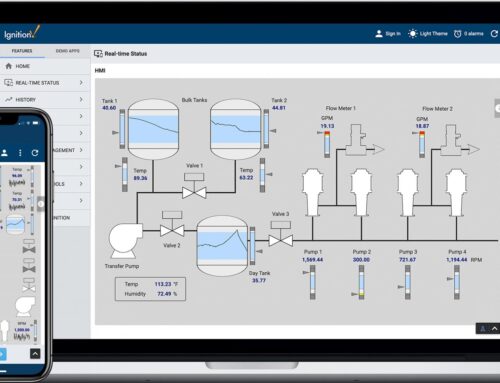
When deploying Autonomous Mobile Robots (AMRs) in rubber manufacturing plants,integration is critical to ensure seamless operation and optimal efficiency. Connectivity is the backbone of triumphant integration. It’s essential to establish robust interaction protocols between the AMRs and the Factory Control System (FCS). AMRs should be equipped with industrial-grade wireless communication capabilities such as Wi-Fi 6 or 5G to ensure reliable data transmission. To maintain synchronization with other automation systems, leverage the Ignition platform to build custom APIs that allow the continuous exchange of data between AMRs, HMIs, and programmable logic controllers (PLCs). This holistic data sharing helps in real-time decision-making, especially in dynamically scheduling material transport tasks from one press to another.
an insightful example of successful integration can be seen in leading tire manufacturing facilities in the US,where customized Ignition modules are utilized for zero-downtime updates in a 24/7 production environment. These modules should be engineered to achieve seamless load balancing across multiple robotic units, reducing bottlenecks in material flow. Interoperability is another pivotal aspect. Ensure that AMRs are adaptable to legacy equipment in the plant. One approach is crafting wrappers using Ignition’s scripting functions to translate proprietary machine protocols into a universally accepted format. Key considerations for optimizing deployment include:
- Path Optimization: Employ machine learning algorithms within Ignition to continuously improve AMR routing efficiency based on real-time plant floor analytics.
- Safety Compliance: Integrate safety systems that comply with ISO/TS 15066 standards,ensuring safe AMR-human collaboration.
- Energy efficiency: Use Ignition’s energy monitoring features to track consumption patterns and deploy AMRs during off-peak energy usage times.
Through methodical integration and leveraging advanced automation platforms like Ignition,rubber plants can significantly enhance their material handling processes,reduce operational costs,and promote a more sustainable production environment.
Closing Remarks
the integration of Autonomous Mobile Robots (AMRs) in rubber manufacturing plants has transformed material transport between presses, resulting in significant operational enhancements. Key takeaways from the deployment of amrs include:
- efficiency Enhancement: amrs streamline the material transport process, reducing downtime and enhancing workflow continuity across the production line.
- Cost Reduction: Automating material movement minimizes labor costs associated with manual transport, optimizing resource allocation.
- Safety Enhancement: AMRs improve plant safety by mitigating the risks associated with manual handling and forklift traffic.
- Scalability and Flexibility: As production demands fluctuate, amrs provide versatile solutions that can easily adapt to changes in production scale and layout configurations.
By leveraging these benefits, rubber manufacturing facilities can boost productivity while promoting workplace safety and operational efficiency.
We invite you to explore how Innorobix can assist in optimizing your plant operations with state-of-the-art AMR solutions. For a deeper dive into our offerings, please consider requesting a personalized consultation or a demonstration to see our advanced robotics in action. Embrace the future of efficient manufacturing with confidence, and let us help drive your plant towards more sustainable and innovative operations.